An Interview With Shalom Auslander
Leah Vincent2011Arts & CultureBooksOff the Derech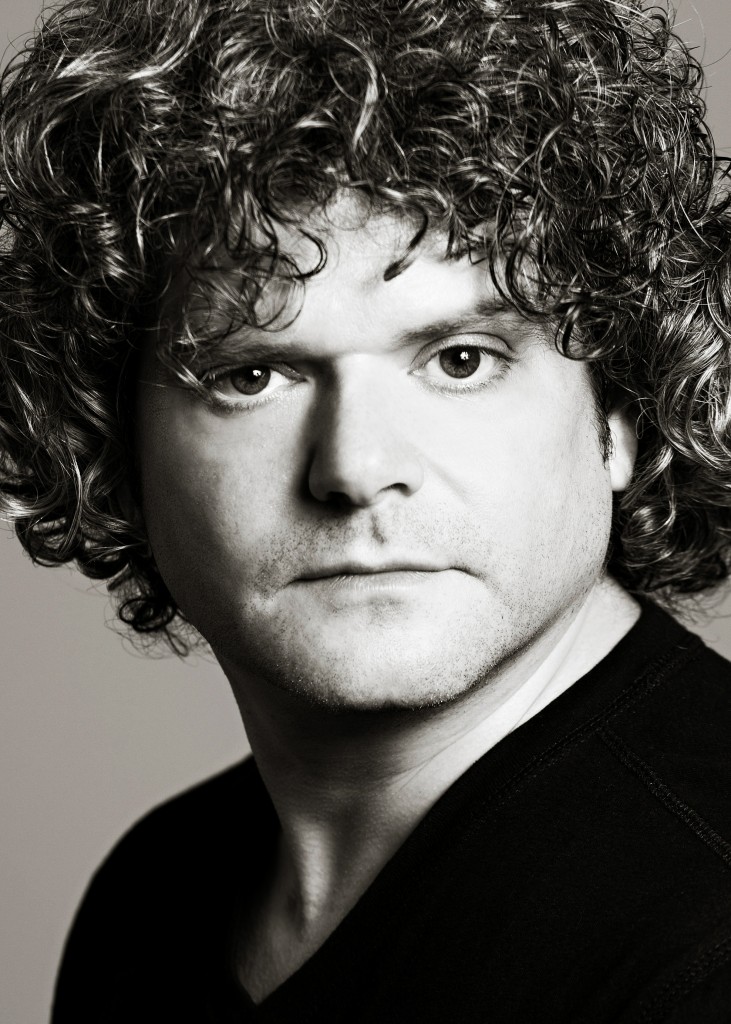
Shalom Auslander
I interviewed Shalom Auslander in a tiny café on Manhattan’s Upper East Side. I expected Old Testament-scale fury, given that his writing is often so brash and bold. Instead, I found him surprisingly low key, his intensity only seeping through in slivers of biting sarcasm.
There’s a wonderful satisfaction in reading a talented writer’s depiction of familiar experiences that are then twisted into revealing a whole new perspective. Before reading Auslander, it hadn’t occurred to me that my own traumatic journey away from ultra-Orthodoxy could be funny. In Auslander, a lowly, sinful human, armed only with acerbic humor, the dreadful, always-hovering God that many of us feared, has finally met his match.
Raised in the ultra-Orthodox community in Monsey, Auslander documented his journey away from religious Judaism in his memoir, A Foreskin’s Lament, a New York Times Notable Book of 2007. His work has been featured on This American Life and in The New Yorker. Hope: A Tragedy, Auslander’s first novel, will be available in January of 2012.
When my interview with Auslander ended, I walked out of the café inspired. So there, I thought. Look at what can be accomplished, look at how people can escape God and live their own lives, on their own terms.
Apparently, God was less pleased. Moments before Auslander and I said our goodbyes, New York City was hit by a 5.8 magnitude earthquake. –Leah Vincent
* * *
Leah Vincent (Unpious): Are you connected with the whole community of those who left the Orthodox world?
Shalom Auslander: I’m very intentionally not connected to anything. Jewishly, secularly, TV, movies — I try to stay the hell away from everything.
Unpious: Why?
SA: I’m not a big fan of most things and I’m happier without any of it. I got really, really lucky with meeting a woman and building our own little family and I don’t need a lot more than that. So I just try and keep things at a distance. Not always at the same distance. My family is probably at the farthest distance. It always fucks things up. You always find yourself doing things you didn’t really want to do and it’s not worth it for me.
Unpious: Can we start at the beginning? How would you describe your religious background?
SA: It went all over the place. When I was really young, up until fifth grade, I went to Yeshiva of Spring Valley, which was really Chasidic even though my parents weren’t. And they’re, like, insane and misanthropic, so while I was in an ultra-Orthodox school, they weren’t keeping anything. They were, like, secular. My mother would show up at PTA meetings in pants, and they’d be like: Oh, a travesty! Then my parents switched me to a more Modern Orthodox middle school and that’s when my father started wearing a hat, [laughs] just –
Unpious: Just to fuck with you?
SA: Just to fuck with me, just to fuck with everybody. Whatever they were going to be, they wanted to be shitting on it. And then I stayed in that kind of world until I was in a very black-hat yeshiva in Israel.
Unpious: You were at Neveh [Zion], right?
SA: Yeah, and then I came back and ditched it all.
Unpious: What role does your background play in your life today?
SA: Hmmm…. What role does it play in my life? I just came from my shrink. How’s that for an answer?
Yeah, fifteen years in, I’m not making any fucking progress. I spent all my money on it and that’s the role my background plays. This thorn that’s never gonna come out. I manage to write about it, occasionally. I’m enjoying writing fiction more now, and it’s grist for the mill. It’s painful, each step is another thing to deal with. When I had my first son, it was: Is he going to die? And should I circumcise him? Then my second son came along and it was, like: I guess I have to circumcise him because of the first. But you know my first thought? (And this is why I decided to write about the Holocaust in the next book.) My first thought was literally this: At least they’ll have each other to go through the camps with. That’s really what I thought. When the next Holocaust hits, that’s a bummer, but at least they can go through it together, and if they get separated, and one is in a camp in Newark and one’s in a camp in Chicago, just knowing – or thinking – that the other one is alive — I remember reading those stories – will help them survive the hard times.
Unpious: My brother once helped me move, and he was looking around my new place, so I asked him what he was looking for. He said he was looking for a place to hide when the Nazis come. I said, “No shit. I do that every time I move to a new place.”
SA: Yeah, always. My house is the perfect hiding place from Nazis. It’s actually good fighting-Nazi territory, or the Tea Party, or whomever. It’s at the top of a hill in the woods with a lookout, dogs, guns. It’s fantastic. Start a whole underground.
Unpious: So that’s where we’re all heading when the Holocaust comes?
SA: [Laughs.] Yeah. No, don’t, because I don’t like guests.
Unpious: When you think about all of your parenting decisions, how are you influenced by the way you grew up and the religiosity you were raised with?
SA: Right now they’re young, so even if I were to teach them about it, I wouldn’t teach them about it yet. My oldest son knows he’s Jewish. He likes to read “One Fish, Two Fish, Red Fish, Jew Fish” – Dr Seuss, but we make it “Jew Fish.” And we mention Mercedes and Shabbos and all this stuff, so it’s pretty much a source of comedy right now.
But I’ve always felt that I don’t have negative feelings towards the culture I came from. I don’t like team sports, so I think all of this is a bad idea anyhow, but I’m not going to teach him to live in fear, and if anybody does I’ll fuck them up.
I remember going to this Reconstructionist synagogue up near where we live, thinking, it’s got to be harmless, it’s all a bunch of fuckin’ hippies, they’re all standing around playing guitars. What could be so bad? We go and it’s this little kids’ Saturday playgroup, and the rabbi is there and it’s so far removed from where I come from, because the rabbi is a she to begin with, and she’s wearing a yarmulke and all the kids are wearing yarmulkes and my son’s like, “What are they wearing? Can I get a hat?” Just because everyone else has a hat. So I’m like, “Yeah, let’s go ask the rabbi for a hat.” So we go up to her, and he says, “Can I have a hat?” And she says, “Sure.” And he says, “Why are you all wearing these hats?” This is Reconstructionist, it’s nothing, it’s like light beer, there’s no alcohol in this compared to what I grew up with. She could have said anything, she could have said because it’s cold out. What does she say? “Because God told us to and he’ll get angry if we don’t.” And I was like, “Alright, well, we’ll see you later, thanks for the hat. Good Shabbos.”
Why does it always seem to go there? To this fucking, practically Christian Calvinist place? That is what I don’t want him to have. If, at ten or twelve or fifteen or whatever, he decides: Hey, you know what, I want to know more, I want to have a Bar Mitzvah. I don’t care. Go, go for it, if it makes you happy. But if it’s making you scared and terrified then we should avoid it.
Unpious: I assume you were also raised that if you don’t have religion your whole life is a mess and you’re a bad person. Do you ever have that residual fear that because your child is being raised secular, somehow–
SA: Oh, yeah, he’ll become a drug addict and be fat and play Xbox.
Unpious: Even though you know that’s ridiculous, is there any part of you that–
SA: You know what, to be honest, what you’re describing is horrendous, but there is an aspect of it that isn’t awful, and it’s what I’ve always thought. It’s fucked up that it’s one or the other, because I’m no lover of Western culture. I don’t have a TV. I don’t love movies. My son doesn’t like movies. It would be nice to be able to give him the idea that there’s something worth striving towards, beyond just this. I’ve had to find other things. He’s very bright. He wants to know and read and learn and I’m just trying to encourage that stuff as a way to deflect from both my ingrained paranoia — that without yiddishkeit you’re a crackhead — and the other side of that, which is, alright, fuck it, do whatever you want, nothing matters. You’re born, you die, who cares. That’s fine for Beckett to say, but he was 60 years old when he wrote that. He didn’t think that as a six-year-old.
I’ve been asked about it a thousand times at these fucking readings. Is there anything good you got out of it? The answer is: Yeah, that there was something beyond. This wasn’t all. That’s a tiny, tiny, silver lining on a huge dark cloud, but it’s there and it would be nice for my children to know that. One way or another. I don’t mean through God or religion, just that it doesn’t begin and end with your iPod apps.
Unpious: How would you describe that “other,” that “beyond this,” for yourself?
SA: Just a larger perspective. Whether it’s being aware of what goes on in the rest of the world, knowing history beyond your own. The book I just finished is a novel called Hope: A Tragedy. It’s kind of about genocide, but not literally. I had to write a lot of versions of this book to get where it was, and the first version was very research intensive. I had to research every genocide that ever happened and I couldn’t believe how, at 40 years old, I didn’t know half this stuff. I’d heard of the Armenian genocide. I’d heard of Pol Pot. But I didn’t know how many peoples had been wiped out, rounded up. That concentration camps started in Africa, not in World War II, not in Europe. This concept is an old one. And I thought, what did they want to convey to me? If it was: People are fucked up and watch out and isn’t it terrible what people do to each other, so be kind, then they would have done a better job if they’d told me about all of these genocides. If they just wanted me to think I was born to be a victim, and that the only people who suffer are Jews, then they’ll only teach me about that one [the Holocaust]. And that whole: our [Holocaust] was much worse than the other, is hilarious. That’s just comedy, the measuring scale of genocides. So putting that aside, because that’s just comedy to me, obviously the goal wasn’t about teaching you to make the world a better place. When they said, “Never again,” they meant, “Again, and soon.”
Unpious: To us.
SA: Yeah. Just us. And the shvartzes can complain about slavery and the Indians can complain about being wiped out, but we all know who the real eternal victims are. So it’s kind of like having some bigger picture. It’s hard. How do you teach your kid — I don’t know the answer to this – that his cultural heritage is being a Jew, but that’s not the be all and end all? The Jews I admire, from Lenny Bruce on down, were the ones who were shit-stirrers. They were just troublemakers. They made trouble in their own community, and they made trouble at large, and that’s a good thing. If I could gift him anything from Jewish tradition it would be to be a shit-stirrer.
Unpious: Which I think is the original Jewish identity. You talk about this so well in one of your pieces about Abraham, the original shit-stirrer.
SA: The original shit-stirrer. If you take Genesis literally, Adam, the first fucking thing he did was break the rules. [Laughs.]
Unpious: When you and your wife decided to leave the ultra-Orthodox community, did you always progress at the same pace or was there ever a moment when she wanted to go farther than you or vice versa?
SA: It was a bit of back and forth. It was like a race. Like, sometimes the leader changes position and makes the person behind feel both uneasy because of their own guilt and also ashamed because they’re not pushing hard enough. I’m not so sure race is the right word. I always felt like we were just both hanging on to the same piece of driftwood and kicking to try and get to shore. Sometimes I did more kicking, sometimes she did more kicking, but we were always kicking in the same direction. She had, I think, a harder time separating from her family than I did. I had a harder time separating from God.
Unpious: Are you now in contact with your family at all?
SA: No.
Unpious: When you published your memoir did you hear from them?
SA: No. I heard from my first cousin’s son who came to the last reading I did. It was down here at McNally, and there’s this six-foot-tall guy in the back who’s looking at me the whole time.
I get a little wary of readings to begin with, because I’ve had enough stupid things happen that I’m on the lookout for things. Not Rushdie shit, but stupid comments or aggressive shit. I remember in Chicago, at my second reading, this group of Modern Orthodox teenagers comes over to me in this bar where I was doing the reading — funny enough, it was for Bookslut — and they kinda corner me afterwards. The lead girl of the group — I found this hilarious, the boys were in the back — she’s like, “We didn’t read your book and we’re not going to.” So I’m like, “Then how do you know you won’t like it? I read all of your fucking books, I read Genesis, I read Leviticus, I read –” And she’s like, “I’m not interested in what you have to say.” But she started to get angry. So I just have no patience for it.
So, anyway, I’m at this thing, and this six-foot monster is in the back of the room, and everyone’s coming over and asking me to sign their books, and they talk a little, and finally it clears out and he’s still there. And I’m like, here we fucking go. He comes over and shakes my hand and he says, “I think I’m probably the only person in our family that doesn’t hate you.” It turns out he’s my cousin. The last time I saw him he was two-feet tall. We actually had a good time. He came over to our house, we got a little high, drank a little beer. It was really sweet, but that’s the only contact I’ve had.
Unpious: Was it hard when you were writing your memoir? You’re incredibly honest about the shortcomings of everyone around you and your own shortcomings. Was that hard?
SA: It was very hard. It still is. Even when I’m writing fiction. I just spent an hour with my shrink going over that, because even though it’s fiction I say to myself, That’s your mother or that’s this or that person – and it isn’t really. It’s totally not. In fact, my life would be a lot better if I had that mother, but it’s hard because there’s a little kid in you who thinks this is wrong, you shouldn’t, you have to protect them.
Actually, I thought it would get easier. I thought with each successive book I would feel less bad about those things. In reality, now there’s this voice that’s like: Oh, come on, give the old woman a break, would you? You already did the memoir, now you got this woman who’s acting like she was in the Holocaust and never was, and blah blah blah, all this kind of crazy stuff. It just gets worse. It doesn’t get any easier.
I used to bike-ride a lot. There’s a great quote from Greg LeMond, who said, “It doesn’t get easier, you just get faster.” It’s true. The peddling is just as hard. It’s just that I can get past the sticking points more easily.
But [Foreskin’s Lament] took a long time to write because it was really hitting it directly and there were a lot of things going on: we were having our first child and this just brought everything up, so everything was on the surface and I was trying to deal with it at the same time.
My wife and I used to take these long walks in the woods behind our house, and I’d just bitch about it, or curse out my publisher and say, “It’s his fucking idea. I’m not doing it. I don’t want to do it. I never wanted to do this. It’s bullshit.” We’d walk and talk every day for like a year, and I remember, somewhat close to the end, walking down this one path again and going: I wonder what the number is? I wonder, what is the number of times I have to walk down this fucking path before that book will be done? There’s a number. It exists somewhere. I wish someone would just tell me. I’ll just fucking walk up and down that many times and get it over with.
But it’s hard. That’s why I’m interested in Unpious and Footsteps, because it’s brutally hard for anybody, in any religion, but I think certain groups, like the Amish and the ultra-Orthodox, make it particularly difficult. You don’t have a high school diploma, you may not speak the language, you have nowhere to go, the job you were promised at the photo place is not going to happen, because you’re a heretic. You really are like an alien dropped off in the middle of a world. You don’t understand any of it, and it’s incredibly cruel. Why anyone would think that a person considering going through that should be forced to stay in the fold is just beyond me.
The Old Testament — to a certain degree, like Nevi’im — is a history of people who said “fuck off.” They had problems with the populace, who didn’t like what they said. They were railing the other way, to be more into God. I imagine them like stand-up comedians. Jeremiah was Bill Hicks, like the people who stand up and say, “This is fucked up.” Or Richard Pryor, saying, “You’re all full of shit and I’ll show you how and I’ll tell you why.” And those people tend to die brutal deaths at the hands of the people they’re trying to talk to, and that goes for whether its religion, Jews, America in general, or people in general.
Unpious: Leaving the religious community, and owning your own experiences, there’s a lot of shame that comes with that, given the values we were raised with. Did you struggle with that?
SA: There is. But the good thing is that it’s cathartic. Memoirs that just beat up on other people tend to be boring, because there’s no learning, there’s no insight. But I take it as a matter of pride that I’m the biggest shmuck in that book. And if you’re going to look at the novel, you’ll see the main character as me, he’s also the biggest shmuck in the book, with his failures. But what that does, is it gives you, as the writer, an opportunity to hold yourself in your hand and laugh.
This is the talk I have with my six-year-old all the time, “Dude, it’s gonna be really exhausting if you need to be right all the time.” And that’s the stage he’s at, that part of his development. You see adults like that. They’re never wrong. They’re always right. It’s fucking exhausting. I’d much rather be able to admit all my mistakes and all my flaws. “Yeah, I watch too much porn, I’m ashamed of everything and I hate myself and I still think God’s gonna kill me.” And then laugh at it. Because afterwards I still feel all those things, but I feel that’s that funny character, that crazy me, and now there’s a slightly more sane me that can talk me out of it.
So the “God’s gonna kill me” voice has weakened. The “everyone’s gonna kill me because I’m a Jew, and if they don’t, they’re gonna kill my sons” voice, that’s as strong as ever. That’s why I decided to write about it. These voices that really get you down and depressed and are very central to who you are, if you’re lucky and you’re able to step back and go, What did I just think? That’s fucked up, that’s probably the thing to write about. Honestly, straightforwardly.
Unpious: That brings me to another question. A lot of people in the Unpious community want to write and publish their stories. What advice would you give them?
SA: I’d tell them the one thing my publisher told me when I agreed to do. He said that the place they all screw up is pulling punches. If you’re gonna do it, don’t pull any punches. Don’t. On yourself. On your past. On anything. You can’t. No one wants to read, “I had a hard time but I’m kinda OK with that.” If you’re gonna do it, what we’re looking for is someone who is willing to do what we haven’t been doing. That doesn’t necessarily mean leaving family, or beating up their fathers, or whatever other thing. It means talking about it honestly. I think that’s probably the best advice and the hardest. There’s nothing magical about it. Just don’t wuss out.
I remember being very frustrated and calling my publisher and saying, “Listen, I’m just telling you right now, there’s no fucking happy ending. I don’t make up with my fucking family. I don’t make up with God. This isn’t like, “I was once an alcoholic but now I’m OK,” or one of those kinds of things. And he said, “Perfect. Because that’s what it is, so write it that way.” And these things have repercussions. I don’t mean necessarily within your family. My family was broken long before I wrote that book. But they have repercussions in your own mind, and with who you are, and how you perceive yourself.
Unpious: Has your son tried reading Lament?
SA: He’s six. He’s reading Spiderman and Captain America.
Unpious: Are you afraid of the day he does?
SA: No. He knows, “Dada’s crazy.” In a good way. It’s just a question of age appropriateness. I think the novel will be harder to explain. Because hopefully it will be so out of his realm of experience, that he’ll be, “Why does she want to suffer? Why is the mother unhappy because she didn’t suffer enough?” Or, “Why is Anne Frank in the attic? And who is she?” There’s a lot more that’s harder to explain, because this book is about history and the effects of history. I don’t have to ever tell him that God got angry and flooded the world, but at some point I have to tell him there was this guy named Hitler and he did some fucked up things. And that’s harder because – “Why?” Again, the answer is, “It wasn’t just to you and it wasn’t the only time. If you were Native American you’d have a real problem with white people.” So just giving him the broader scope of it.
Unpious: Is it a source of pride and joy that you’ve raised a child who won’t be afraid of God?
SA: It’s a source of pride and joy that I raised a child who’s really happy. He’s just happy and he knows we love him and he’s not afraid of me. I was terrified of everyone around me. He’s not afraid at all. He has incredible anger radar. When we have friends over, or just people we met, or workers, he can smell anger. And I have good anger radar too, because of where I came from. But he can sniff it a mile away. If there’s someone I think of as quite a decent guy, and for some reason my son doesn’t connect with him or want to be around him, it makes me very suspicious. And every time something happens. There’s a blow up, or he loses his temper about something. My son is very attuned to it, since he’s never been around it. We don’t shout. We shout in jest. That’s the thing I’m most proud of. He doesn’t get it. We have neighbors who we’re friendly with, and they’re good parents but they’ll yell occasionally, and he doesn’t know what’s going on. It’s all foreign to him. To me, that’s fantastic.
Unpious: Do you have any advice for parents who come from this culture who are trying to raise free and happy children?
SA: Are they still in the culture?
Unpious: No.
SA: They’ve taken the first step. I think they’ve done the right thing. Raising kids is difficult for everybody, but my wife and I are coming up on twenty years of marriage. So we spent fifteen years working our shit out before having a kid. It took a long time and there was a lot of shit to work out. And that’s helped a lot. We don’t resent them. We don’t feel like they’ve infringed on our lives. We know when we’re being crazy and I sense that anger in me rising and I know what to do with it. I know to go to my office and write. It’s hard, no matter what you’re talking about, because kids can be hard. But I’m just happy that they both feel loved. I just didn’t feel that love [when I grew up]. There were ancient, ludicrous conditions, 613 of them, and that’s no way to grow up.
I remember two interesting questions that were posed to me at readings. One was, “Now that you’re a parent, do you understand more of what your parents were going through and why they did what they did?” And I was like, “Are you fucking kidding me? Now that I’m a parent I understand it even less.” How do you do that? How do you scare your son? How do you scream like that? How do you hit your child? I don’t get it.
And the other one was a guy who stood up, a very Orthodox guy with a long beard, and he said something my mother would say, which was, “In twenty years, when your son comes home a Chasid, I’m gonna have a real good laugh.” And my first comment was: “That is a really long fucking time to wait for a laugh. You need to go out more. And second, why would that be like a gotcha on me? If he’s happy, I don’t give a fuck. You could have said gay. You could have said transgendered. You could have said anything. What the fuck do I care if it makes him happy? You’re the asshole with that question, because you’re explicitly showing that you’re going to withhold love from your son, or hate him, or be disappointed if he comes back some way.” If my son comes back a criminal and a murderer I’m gonna feel awful, but I’ll also feel some sense of responsibility. There’s no: Gotcha! He’s a rabbi. What the fuck do I care? He’s a gay transgendered black rabbi, that would be even better. Because then my family will just die. They’ll just drop dead. In unison. Just, bam.
Unpious: If you could be dictator of the world for a day and change one thing about the religious community, what would that be?
SA: It sounds like a lot of work. I don’t think I want that gig. No. I don’t care enough about the religious community to change it. I honestly don’t. If you asked me about the world, I don’t know, maybe a little more self-awareness in people, just one percent, one degree more, would be invaluable. What would I do to change the religious community? It wouldn’t be on my first day’s list of things to do. I might get around to it in year two. If I get reelected. I’ll make it my second term project. I just don’t care. I don’t think it matters.
Unpious: All of the stuff that goes on in that world – the molestation stories, the financial scams — it’s not part of your awareness?
SA: I don’t know about it. I heard about the kid who got killed. Kids get killed everywhere. The only thing that surprised me about that, were that people were coming over to me – I was in Spain then — and asking me about it. I didn’t fucking know him. Twenty other kids got chopped to pieces that day, how come no one’s asking me about that?
But I’m sure there are the same stories that went on when I was a kid. Rabbis touching children and people stealing and I don’t know what else. Who killed somebody and ran off to Israel today? Somebody, I’m sure. Which is a pet peeve of my wife, because her family is from Israel and the idea that a Jewish state harbors murderers and killers is fucking horrifying. But I’m not big on the Jewish press. Honestly, I’m not big on any press. The only time I ever buy magazines or newspapers is when something I write is in them, because I have this self-delusion that it’s gonna matter some day if I have a copy of it.
Unpious: Who are the writers who inspire you?
SA: It depends on the day. Most frequently, Beckett, for his humor and for laughing at the darkness. Other than him, Kafka to a certain degree. I just hope there’s an afterlife, because I’d just love to go down to a pub with Sam and have a drink.
Unpious: You’ll probably end up in the same corner of the afterlife.
SA: And after that existence can end. But with my luck he’ll be a fucking asshole. He’ll be an anti-Semite. “How many fucking Jews want to have a drink with me. Go to hell. Hitler was right.” “But you’re– But I can’t go on–” “Go fuck yourself. How about that?”
Unpious: What three books would you recommend for someone just leaving the community?
SA: English for Dummies. How to Get your GED at Home. And I imagine they already know how to download porn or they wouldn’t be leaving. Or there’s that book, How to Get Lost and Stay Lost, for how to disappear. That’s if you don’t have the balls to just tell your family to stop calling and change your number. I had to do all that for years. I changed our number frequently. I ended up putting spam blocks on my e-mail.
Unpious: They were reaching out and trying to be in touch?
SA: I think reaching out is a little bit [of a stretch]. Son of Sam wasn’t reaching out to his victims, he wasn’t trying to bring them close.
16 Responses
> …look at how people can escape God and live their own lives, on their own terms.
It’s funny you should say this, because if there’s any person who seems incapable of escaping god, it’s Auslander (based on his own writing).
That’s what made him so interesting as a person (and interviewee) – *despite* his God issues, he’s managed to carve out what seems to be an incredibly grounded and self-defined life.
Great Subject and great interview!
“And I imagine they already know how to download porn or they wouldn’t be leaving.”
Sarcastically tongue-in-cheek? Is this Auslander just being Auslander?
I haven’t had a chance to read any of his books, but this guy sounds funny and totally messed up.
Brilliant. Thanks for such a great interview!
I laughed all the way through the foreskin’s lament. Auslander is a seriously talented writer. I’m intrigued by the new genocide book he’s writing. I’ve often maintained, just as he does, that death is pretty ultimate and intense suffering is intense, so our Shoah, was no worse than the hideous sufferings of the groups he mentioned.
Brilliant interview. Wonderful.
Apparently, God was less pleased. Moments before Auslander and I said our goodbyes, New York City was hit by a 5.8 magnitude earthquake
Huh, here I am thinking all along the earthquake was because of the gays.
Anyway, after reading Foreskins Lament I emailed Auslander thanking him for writing it and observed that the book has become something of a “must read” memoir for the burgeoning OTD community.
Someone should make a list of must read materiel for the OTDer. Oh, in reference to the term OTD, Shalom Auslander told me that he always thought it stood for Out The Door.
Excellent interview. Auslander’s writing always intrigued me. I believe for many of us his work is one of the first experiences with writing that addresses the questions we secretly wonder about.
Really great interview. Here’s a piece Auslander penned a few years ago which details his encounter with his bookstore hecklers: http://www.tabletmag.com/arts-and-culture/books/959/civilization-and-its-discontented/
Let me see if I’ve got this right…
The Shoah wasn’t uniquely hideous, but Auslander’s childhood was uniquely hideous.
Jews are wrong to remember their suffering, but Auslander is “brave” and “shit-stirrer” when he calls attention to his own.
At the very least, Auslander is skilled at dreaming up unusual moral equations.
Der Bik, where did you elicit that Jews are wrong to remember the shoah? All Auslander intimated is that it does not water down our suffering if we accept that other groups such as African Americans also have horrific legacies involving wanton cruelty, death, subjugation, deprivation of family ties etc I personally think he is right because millions of blacks died in awful agony in states of starvation and disease bound in chains whilst being transported to the Americas.
How incredibly inspiring to read:
We don’t shout. We shout in jest. That’s the thing I’m most proud of. He doesn’t get it. We have neighbors who we’re friendly with, and they’re good parents but they’ll yell occasionally, and he doesn’t know what’s going on. It’s all foreign to him. To me, that’s fantastic.
Fantastic indeed.
Reading Hope: A Tragedy, presently, and really appreciated/enjoyed this interview.
I went to high school (TMSTA YUHS) with Shalom .
He was not ultra orthodox. None of us in the school were, although there were varying levels of observance.