Rabbi Yosef Shalom Elyashiv, Leader of Charedi “Yeshivish” Community, Dies at 102
A.M. Yehuda2012Opinion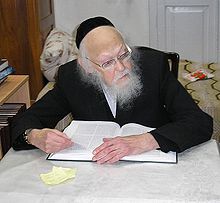 If things had turned out a little bit differently in my life, today would be a very sad day for me. Earlier this morning, Yosef Shalom Elyashiv, the 102-year-old leader of “Yeshivish” Jewry, died.
When my family mourned the death of Rav Moshe Feinstein in 1986, days after the death of Rav Yaakov Kamenetsky, there was a sense that Feinstein and Kamenetsky’s deaths marked the end of an era; the two of them, it was believed, possessed the kind of greatness that no living rabbi could match. Rav Elazar Shach was the next rabbi to take on the mantle of “Godol Hador” until his death in 2001, and in the years since, Elyashiv played the role of leading Torah authority.
I don’t agree with the Yeshivish community on the vast majority of things, but I do agree with their belief in yeridas hadoros. Elyashiv was no Feinstein. Elyashiv, continuing down the path that Shach hewed, took Yeshivish life to a darker, more extreme place. While Feinstein and Kamenestky ruled by virtue of their scholarship, Elyashiv, following Shach’s lead, consolidated power formally, attacking those who disagreed with him and defining an ever shrinking boundary for what constituted “valid” Torah Judaism.
Elyashiv, like Shach, took advantage of the number of his followers within the small country of Israel and externalized his control within Israeli politics as the absolute spiritual leader of the Degel HaTorah party, which had been formed by Shach. Elyashiv’s power was now almost indistinguishable from that of Chasidic rebbes — whom Litvaks traditionally scorned for their blind obedience to a single leader. This is in stark contrast to earlier traditions of the Lithuanian community from which the Yeshivish lifestyle springs. In pre-war Europe there were numerous yeshivas with markedly different approaches. The Yeshivish world today, under Elyashiv’s leadership, has become a singular group, loyal to a single leader.
And that leader has altered Yeshivish culture, intensified it, and raised it to levels of extremism previously unseen. Although I’m no great fan of Feinstein or Kamenetsky, their approaches had a small degree of rationality, of balance, that is absent from Elyashiv’s rulings.
- Kamenetsky ruled that it may be permissible for a man to shake a woman’s hand, violating laws of negia, in order to avoid embarrassing her. Elyashiv, on the other hand, told a young man he had no need to apologize for screaming at a woman who had the audacity to sit in the front of a bus.
- While Feinstein ruled that chalav yisroel was an unnecessary stringency in the United States, Elyashiv tightened the rules of kashrus by issuing an edict forbidding consumption of most fresh saltwater fish, including salmon, halibut, flounder, sable and cod.
- Feinstein wrote that dina d’malchusa dina was binding, and ruled that those who evades taxes must repent and never do so again. Elyashiv, by contrast, scorned the Israeli government, and when asked to support a traffic offender law, he had this to say: “How can we support any non-Torah laws — even indirectly? We may not support them.”
My beef with Elyashiv goes beyond his increasing fanaticism relative to his predecessors. Although I object to his religious stringency, I’m more appalled by his brazen disregard for children’s safety.
When Elior Chen was accused of abusing children, leaving one in a vegetative state and others serious injured, Elyashiv signed a letter declaring Chen’s righteousness and innocence. (Chen was sentenced to 24 years in prison. During sentencing, the judge remarked: “The defendant employed a reign of terror over the children which included violence, contempt, and degradation.”).
When Rabbi Yitzchok Fischer, a mohel from Monsey, N.Y., was linked to the death of an infant who contracted herpes after Fischer performed metzitzah bepeh following the circumcision, Elyashiv signed a letter declaring Fischer’s innocence, encouraged him to continue his work, and added a blessing for hatzlacha.
But Elyashiv’s responsibility extends far beyond these cases to all cases of sex abuse, child abuse, and other instances of misconduct that have been mishandled by the Yeshivish community. The average Yeshivish man or woman can claim innocence by lack of control; what can they really do to change things? they might argue. But there is no such excuse for leaders, particularly a leader with the kind of power held by Elyashiv.
The end of Elyashiv’s reign is no cause for sadness — that is, until we take note of the trajectory of ultra-Orthodox leadership, and we begin to fear who will come next.
26 Responses
Very well said. Here’s another vignette showing the extreme dysfunction which this man lived his life by. Apparently, he had so little contact with his wife and kids that he didn’t even know their names(!), and barely spoke to them all week. (What’s really crazy is that this behavior is considered evidence of his greatness!)
By the way, R’ Shlomo Zalman Auerbach was another figure considered a gadol who, even though in his own life he was a strict chareidi, had a much more generous and less extreme approach in his policies, and a much more positive attitude towards Jews outside his camp. Sadly, it seems mainstream ultra-Orthodoxy has chosen to forget the approach of these leaders and adopt the narrow-mindedness of people like Elyashuv.
The link about the edict forbidding consumption of most fresh saltwater fish doesn’t work.
Thanks.
Great essay.
And good link Hedyot, i was thinking of linking that when I read the essay.
The history of Elyashiv is important to take into account when thinking about his leadership. He started out in the rabbinut, so much of his leadership as godal hador was to prove to the Haredi world that he is frumer than that, all of his rulings were attempts to prove how frum he was.
A.M. Yehuda is right about the Yeridas Hadoras. It started with Rav Shach, his fanaticism made the Old Satamr Rabbi seem lenient. Shach, Kanievsky, and Eliyashuv al made a virtue of aloofness, rudeness to those who disagree with you, and promoting an ideology that is indifferent to human struggle.
Compare that to Rav Shloime Zalmen Oirbach, a leader known for his compassion and understanding that times they are a changing (if you can see his uncensored responsa in regards to shmita, which of course isn’t sold in Bnai Barak) For Orbach and Feinstein leadership meant understanding their followers and the situation they lived in and the halachic flexibility required to improve their lives. For Shach, Kanievsky, and Eliyashuv people’s struggle never came into consideration, the only thing that mattered was who can be more stringent, more seperated from any human interaction, and more harsh on those who disagreed with them.
I lived in Bani Barak for two years, and I agree with A.M. Yehuda, we should be very concerned for what comes next.
“I knew Feinstein, Feinstein was a teacher of mine. Elyashiv, you’re no Feinstein.”
Well said.
Thanks for this detailed obit.
I agree with you on the yeridas hadoros as it concerns the Yeshivish, interestingly they choose to self apply this principle and actualize it while the rest of humanity believes in aliyas hadoros and works towards actualizing that reality.
Yehuda — Thanks for noting the broken link. It looks like that page has recently been made unavailable, but as of today, it can still be retrieved from Google’s cache.
Take a look here…
Thank you for this piece. It’s a very welcome change from obituaries I’ve seen elsewhere. (I’m looking at you, HuffPost Religion.)
J. — In response to your question (now removed), reason for change is top secret. As the rabbis say, “Hamayvin yavin.”
Shulem,
Thanks for removing that question. Hamayvin yavin is right, you would think that would be the case before it’s pointed out and made plain but apparently common sense is a tough commodity to come by.
As R’ Elyashiv was antisocial, many of his edicts were done through his shamoses (assistants). They are his intermediaries with the outside. This leaves himself at their mercy. Perhaps in the name of God they will alter his answers to be more stringent. Or even the facts of question asked.
At various times, the authenticity of his signatures on Kol Korais (Rabbinic decrees) was called into question. (Sometimes it was because there was a document allowing a previously prohibited activity.) The signatures may have been done through the assistants.
This is in no way justifying bad things he has done. He just may not be as powerful as we think.
Shragi, I assure you I’m not lacking in common sense. I get it, I get it. I was just pointing out the discrepancy. The reasons for the switch were quite obvious to me. I was going to ask you to remove my question, Shulem, but you got to me first. You also changed the reference in another comment. Well, at least you know we catch these little mistakes :).
J. — I’m glad to see we have such attentive readers!
It is fine to say “Hamayvin yavin,” but on the internet that is just a teaser for an in-group, and leaves out ein mayvin.
elyeh, it is now an inside joke. Or a non-joke.
This morning in shul I was subjected to a bunch of beautiful stories that portrayed R’ Elyashiv’s greatness.
Among others, there was this gem; a man came to him complaining of shalom bayis trouble, he said that it bugs him when his wife doesn’t clean out her hair brush after she uses it, to which the gadol’s response was: I think you have it too good in life. As the man was leaving he tripped, fell down some steps and broke a few bones and had to spend a month in the hospital where his wife took good care of him and he came to appreciate her.
The difference between Ravs Feinstein and Auerbach, zt”l, and those who came after is simple: proximity to people.
If you wanted to find out what Ravs Feinstein and Auerbach thought, you asked them and they answered you along with copious explanation as to why they chose the answer you did. All this ended with their passing.
After them the modus operandi became decree by fiat and chas v’shalom you should ask for an explanation because they means you didn’t trust that the decree was correct.
But what’s more, you no longer had direct access to the Gadol, rather his handlers filtered everything and also filtered what he said. Really, we have no idea what Rav Eliashiv thought on certain issues, only what his handlers say he thought. The stuff he signed? Rubber stamped. The decrees he made? Probably didn’t know he’d issued them most of the time.
It is this model of dysfunctional leadership that worsened things.
Garnel I completely agree and think you hit the nail on the head . I think its the difference between poskim becoming an institution as opposed to remaining people.
1) rav alyashuv was very accessablle till 3/4 years ago
2) RYSA certaily poskened stealing taxs is gezel gamor… Look in the book hashakdan
3) there are other mistakes in the Post and comments
Shragi,
Certainly sounds like a good story but it’s likely extremely embellished or just outright fairy tale.
Regardless, anyone who gets a kick out the irony of this bubba maisa is twisted and sick. A man was having marital strife (like half the people in the U.S. and 2/3rd of Israel). He goes to his Rebbe for advice and he receives a flippant response from a callus demagogue.
The point is punctuated by the man leaving the building and having a serious accident that netted him in a hospital for months on end. Must have been divine intervention? Wow. That’s a story that the followers enjoy telling. Frankly, it’s cruel and sadistic.
Friends, I guarantee you.. This is not “greatness” and I assure you that’s not Hakodosh B’rchu’s M.O. These people need to do some serious soul searching.
Alternatively, maybe Eleyashiv had a wicked sense of humor and likes to tell jokes during Shal’ Shudos. I can live with that.
BTW: My wife leaves hair in both her hairbrush AND mine. It drives me bats as well
Solid post, but I have a couple of comments that might clear things up:
1. Regarding the Dina DeMalchusa Dina ruling in #3, as far as I understand this applies to a) non-Jewish countries and b) in cases where the law doesn’t go against Torah law. R’ Moshe Feinstein likely said what he did in New York, and the U.S. is a non-Jewish country. Israel, however, is a Jewish, though, secular, country and the rules there are therefore less clear.
2. Rabbi Elyashiv signed a petition declaring Elior Cohen’s innocence? Two things I noticed from videos: a) Rabbi Elyashiv’s head was always in the Talmud and not in this world (see http://www.youtube.com/watch?v=Cf4TI9T6Ag8), especially when he would he learning in between questions, and b) the people approaching him would ask him questions in a way that he would easily be manipulated. Truth is, someone who is learning with the intensity that Rabbi Elyashiv did really has no right to be a Dayan or Posek. There is a time to study and a time to deal with pressing matters. One of Rabbi Elyashiv’s weaknesses IMHO is that he wasn’t Koveah Ittim with regards on when to stop learning and to focus on the task at hand. I’m sure that if he or any clear-headed individual were to hear the question uninterrupted he would not have signed.
See ‘kooloytoyra.blogspot.com’ top post.
This article is pretty much related:
http://www.nytimes.com/2012/07/19/world/middleeast/rabbi-y-s-elyashiv-master-of-talmudic-law-dies-at-102.html
Does anyone have a timeline for these stories? As gedolim age, there is a strong tendency for their assistants to completely filter and influence everything that comes to them and one never knows the context of any rulings.
interesting post, strikes me odd though, as R’ Elyashiv if anything was extremely non-political, most political things said over from his name, are people abusing his name for their own agenda.
I am not a fan of R’ Elyashiv and yet your article lacks valid criticism. Comparing different rulings without analyzing the different contexts is unfair. R’ Elyashiv did not just get to his position by strong arm he did achieve a significant level of scholarship as well. Regardless I personally do not like the direction R’ Elyashiv took the Yeshiva world and I think anyone in that world is the worse off for it. Particularly his leadership in directing the Yeshiva world away from more liberal readings of Chazal (talking about his fight with Slifkin) is just one indication of the extreme rightward direction he took religion.
One other thing any quotes from him supporting abuse or things he signed to that matter should not be taken at face value. Any intelligent person should realize by now that kol koreh’s signed by gedolim means nothing. Much of the time they did not sign the final version or they signed with caveats and the people publishing use poetic license to give the wrong result.
This goes beyond yeridos hadoros. That only means that successive generations are not as great, not that they’re crazy. We are dealing with end of days. Many of our leaders – I don’t know which ones – are eruv rav.