A Goy at the Shabbos Table
Sara Nordmann2011Religion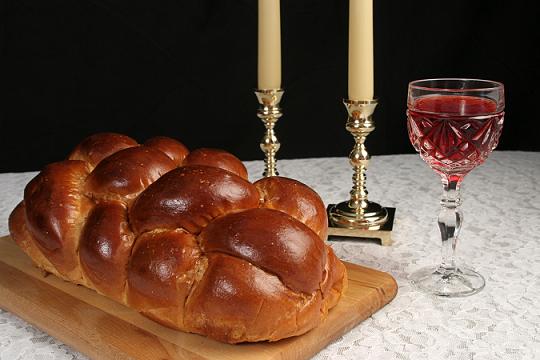
Photo: Rachel F. Young/Fotolia
Ever since I met Yitz and his friends, I’ve been struggling with the question: How do I explain Williamsburg to my mother and Alabama to the Chasidim?
When I first mentioned my new friends to my mother, she was less than thrilled. “These don’t seem like your people,” she said. “Are they freaks? Is that what you like about them?”
I went on to explain what I liked about them—their warmth, their humor, their apparent unconditional acceptance of me, a shiksa, in their midst—but my mother only listens to me half the time, and only haphazardly remembers what she does hear.
“Here’s the takeaway, Mom. They’re welcoming. I’ve never met a group of people so willing to take me in, sight-unseen.” These friends have mostly rejected the tenets of Chasidism, they tell me, but there’s still something about them that appears rooted in their culture, the emphasis on family and community and opening their doors to a stranger. “Maybe I’m honeymooning,” I said to my mom after a moment’s thought, “but I’m enjoying it for now.”
With that, she gave me a break. No doubt I’ll have to explain myself again next week, but for now she’s content that I haven’t sold my soul to a cult.
I was considered a gifted child. Aside from an absolute inability to carry a tune, I excelled at pretty much everything. I started speaking single words at nine months, full sentences by a year. I read Steinbeck in the second grade. When I didn’t score perfectly on a standardized test, I still reached the 98th percentile. When I sketched storybook characters, no one believed I’d drawn them without help. I was pretty sure I was normal. My mother was convinced otherwise. Ever since I was little she has been monitoring my life anxiously, afraid that one day I’ll turn my interests to something misguided like heroin, or worse, the Moonies, and she’ll lose me—and all my precious gifts—forever. To my mother, the Chasidim are just another entry in her long list of worries.
As a child, others around me, too, had great expectations: either I was going to save the world, or I was going to shatter, too fragile to be useful. While still in elementary school, adults used to ask me ridiculously mature questions. “What med school do you plan to attend?” a friend’s mother once asked as we waited for the bus the morning after a sleepover party. I was eleven.
Now, as an adult, those who’ve known me since childhood think I’ve fizzled. I haven’t accomplished much to speak of, which my best friend Maggie has been reminding me a lot lately. “You seem interested only in—I don’t know—autistic kids, vagrants, trannies… For godssakes, get a real job.” Not only have I failed to cure cancer, but I’ve developed a fascination with outliers, people on the fringes of society. Chasidim, Maggie seemed to say, are just more of the same.
On the phone again the next day, I reminded my mother that I live five blocks from Maggie and I rarely get to see her. I have to text her two weeks in advance to get a slot in her busy social calendar. But these Chasidim—they get together every Friday night. “Can you picture that, Mom? Can you imagine gathering up your family members and friends for a big dinner every single week? No soccer practice, no work meetings, no trips to Wal-Mart?”
My mother admitted she couldn’t. Sure, families in the secular world have dinner together, but it’s not a drop-everything affair and it isn’t imbued with a sense of sacred importance.
And then, as we were talking, Yitz called. “Gotta go, Mom,” I said. I was meeting Yitz and his friends for the Shabbos meal, and the z’man—one of the many words I was learning—was fast arriving. I felt bad for cutting my mother off, but my guilt was assuaged by the sound of the TV in the background. She wasn’t exactly giving me her full attention.
Yitz told me to pick up some booze for the Shabbos meal, and I hastened to get dressed. I shimmied into some black tights and the one tznius dress I owned, then pulled on a long wool coat to complete the ensemble. My black lace-up ankle boots instantly marked me, by the scrutinies of real Yidden, as an outsider playing an odd game of dress-up. Fortunately, I could still pass as young enough to have my hair uncovered. The important thing was that I was present and genuine. And that I came with whiskey in hand.
I used Shabbos dinners as an opportunity to improve my vocabulary—mikvah and heimish and gefilte fish. I particularly liked saying Yiddishkeit, playing with the emphasis, spitting it out forcefully. If anything, I was dedicated and it endeared me to my new friends. I still didn’t quite grasp why they liked me, though. I was openly critical of some aspects of Judaism, and I couldn’t suppress my laughter when Yitz explained niddah to me after a few drinks. “Really? God cares when you have sex?” But yet they embraced me, and I basked in their warmth. I’d never met so many people so willing to accept me.
Saturday morning, I lay in bed and my eyes drifted to the framed college diploma on the wall. “The Savannah College of Art and Design awards, on this first day of June in the year of 2009…” After my college graduation ceremony, my favorite professor pulled me aside for a tight hug. He told me I was one of his brightest students, and he really believed in me. What would he think about me now? That day isn’t so distant, but it turns out that I’m just an average adult. Quirky, yet average. He might be disappointed. I’m disappointed, for Christ’s sake. Thinking about this made me want to call my mom.
“I’ve decided that it’s okay that I’m never going to save the world. I’m okay with it. I am still special in my own way. I have friends that love me.”
“Does this have something to do with those Jews?” she asked after a pause. “I get why you like them, but why in the world do they like you?”
I thought it best to change the subject. “Can we work out the Thanksgiving menu now. Does Emily want that cornbread stuffing this year?” I’d decided to host our family’s Thanksgiving dinner at my apartment in Brooklyn. My family is flying in from Alabama and I’m gathering up a few wayward friends for what I hope will be a heart-warming union of loved ones. I even purchased a new dinner table which makes my kitchen look like it belongs to a large Chasidic family–hardly enough room for the diners. The oversized table is a visual declaration of my revised values and a chance to edit my life’s script for the positive.
“Maggie said she’d come over the night before to prep the soup, and Yitz offered to bring a loaf of challah. That’s bread.”
“As long as it doesn’t taste funny…” Mom trails off and I roll my eyes. “I’m interested in meeting one of those Chasidics, though. Lord knows they’ve got to be more normal than those green-haired kids you brought home in high school.”
And more normal is all the approval I need.
17 Responses
Sara, this is gevaldig! (You do know what that means, right?)
And you know what? Maybe you haven’t saved the world, but I haven’t finished shas either…
I’ll be waiting for the post Thanksgiving dinner sequel.
Pretty sweet.
Ugh. Why use the word shiksa? It’s not cute. Notwithstanding, a very good essay. I hope you’ll write more.
Fun read.
LIKE THIS A LOT!
This was cool. Many layers in there. Thanks for sharing!
Wonderful read-it made my day!
sara, this is so sweet! sounds fantastic. hope you will continue to provide us with additional chapters of your life, in what type of home you grew up, how you came to know these hassidim, and l’maaseh, what do you do or what are you planing to do for an occupation.
Sara I really enjoyed your piece . It also gives me a sense that OTDer’s/Unpious folk are becoming a community (giving you the opportunity to analyze it as an outsider) ,which is really comforting, because one of the problems that Unpious folk go through ,myself included, is loneliness.
Velvel — Loneliness can be a problem when one first leaves. There’s also, according to what I’ve seen (and felt), a certain caution at first in getting to know other OTDs. But the large majority of folks do find a solid community, which has been around for a while and is getting stronger. A large number of Unpious readers and writers are members of Footsteps — which anchors a lot of the OTD activities in and around NYC, both directly and indirectly. If you’re lonely, then I strongly suggest you check them out.
Nice story Sara!! Here on Unpious I think I would expect something along the lines of “A Chusid’s first Christmas Ham”.
Beautiful post, but the picture doesn’t do it any justice. The חלה isn’t the real בארכע that an authentic chusid would have admired. The crust isn’t crispy, and I can’t imagine a cold פארגליווערטע fish קאטשיניא, possessing even the slightest chasidish pride, to allow itself to be defiled by this חלה being dipped into it.
In short,
ס’רינט נישט קיין שפייאכץ פון די לעפצען איבערן אומגעקעמטע חסידישע בארד.
Shulem- I am at a situation where I am half in the frum world and half out , and due to my job I don’t think it’s worth the risk of checking out Footsteps etc , but thanks for the advice.
Sara, this is ‘zaftig’!
It might be that it is ‘you’ thats more welcoming of the hassidim, and willing to reveal the secrets of the shiksah world. Not many outsiders are genuinely interested in our (formerly) weird, twisted rituals. And a mandatory family dinner every week can get a little redundant, but not when they have some shiksah guest every now and then.
Sara, really liked your insights but I’m stuck on the whole gifted angle. Far more focused on your exceptional giftedness, how children like you are so different from the norm, how they are misunderstood, the expectations, that whole aspect of “peaking” and whether they truly plateau or is it more because of the expectations thrust on these kids.
Highly gifted children are a sort of specialty of mine because I have one and have been researching and reading about it since my daughter was little. There are the Steve Jobs, rare though they may be, who take all of that counter culture and do something absolutely brilliant with it.
Given the little you’ve shared and what I know about extremely gifted youth, it doesn’t surprise me you’re drawn to outliers. Because after all, high intelligence is rare and makes you an outlier from the start. And while I’m not your mom, I understand the anxiety we parents feel when we wonder if all that IQ will simply lead our kids to doing somethig “strange” rather than useful.
I really get it. And you’ve underscored how much these children need undivided attention and really crave being understood and listened to. Unlike you, though, I grew up with Chassidim and as much as I’ve left, there is that magnetic pull. Unlike some here, I don’t have a foot in each world. Rather I have separate world. My main one and the detour I take to go “home” and visit.
My siblings are not secularly educated but when I’d watch my father rehearse Talmud, I saw his genius and how incredibly gifted he was and in some way (many ways), he imbued me with that insatiable intellectual curiosity. I simultaneously find their world small and dull and captivating and fascinating all at the same time. Go figure…
Ouch!!! My typos are glaring. For an English major, nuch. Correcting: “Something” and “Rather, I have two separate worlds.”
Dear Writer and Readers,
My heart goes out to you all. Division DOES breed loneliness, and inclusion seems to heal so much that needs healing in our spiritual and social lives. We were created in God’s image, and God being LOVE, made us to love and be loved…when we’re not getting a big enough dose of love, we feel off, and down…when we’re not giving acceptance and love to others, it’s also unhealthy. I appreciated this article as a former “orthodox Pentecostal” with the long hair, long sleeves, and high necklines, no make-up, or jewelry, who left and moved on into a more secular life-style…trying to cope as I tried to fit in and not lose the core of what is important. It’s “a tough row to hoe”, as they say in the rural south…but, necessary to growth and happiness. God is everywhere,however. We live and move and have our being in HIM. So, why worry? Just talk to HIM more, and grow in trust and faith. Blessing to you all in your interesting journeys.