Interview with Professor David Assaf
Frieda Vizel2012Arts & CultureBooksReportsNews & MediaOff the DerechReligion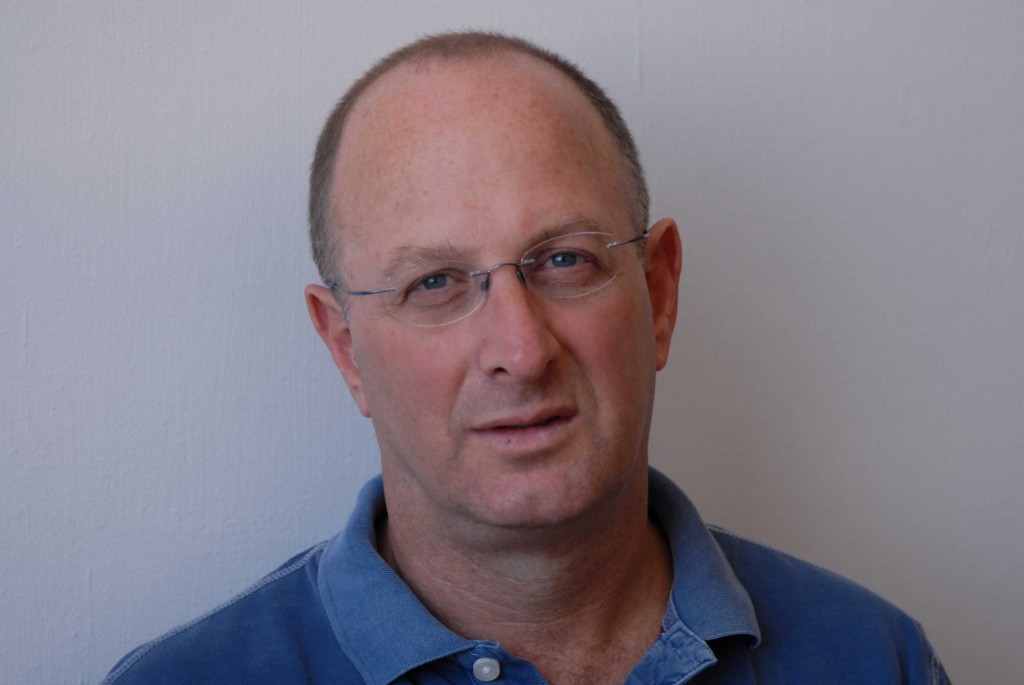
Professor David Assaf
I met with Professor David Assaf at a kosher-style restaurant on Manhattan’s Upper West Side. He arrived carrying a backpack and a camera, taking photos of everything around him: me, his chicken soup and kneidel dish, the Israeli shopkeeper who came by to chat. He humored himself extensively on account of my “Hungarian,” or Ashkenazi-accented Hebrew.
His spirited, rapid-fire speech—in English with a thick Israeli accent—lapsed into Hebrew occasionally, but resulted, nevertheless, in a delightfully engaging and thoughtful discussion. At the end of our interview, Professor Assaf insisted I accompany him to nearby Zabar’s, for a peek at his favorite apple strudel.
David Assaf is a professor of Jewish History at Tel Aviv University, specializing in the history of Hasidism. In particular, he has earned a reputation for uncovering tales of scandal and ignominy previously ignored in Chasidic historiography: the rebbe’s son who converted to Christianity; the rebbe who attempted to commit suicide; Chasidim harassing and beating up other Chasidim. Assaf is the author of Derech Hamalchut (“The Regal Way”), Ne’echaz Basevach (“Untold Tales of the Hasidim”), and many essays on the history and development of the Chasidic movement.
Professor Assaf’s latest book, Heitzitz ve’Nifga (”Peeked and Got Injured: The Anatomy of a Hasidic Dispute“), is about Bernyu, the son of the rebbe of Ruzhin who, in the year 1869, abdicated his position as rebbe and joined up with the Haskalah movement. The resulting uproar led to the decades-long feud between the Chasidic courts of Sanz and Sadigura, marking one of the most tempestuous periods in Hasidic history, involving hundreds of rabbinic leaders and dozens of Hasidic communities throughout Europe. Heitzitz ve’Nifga was released on May 9, 2012, from University of Haifa Press and Yedioth Books. —Frieda Vizel
* * *
Frieda Vizel (Unpious): What’s your personal background?
Professor David Assaf: I grew up in a religious Zionist environment. I was religious until my university days. I prayed three times a day, wore my kippah, tried not to touch women—shomer negiah, etc.
At one point during my university days, I had a personal realization: I don’t have any religious emotions. Nothing. I fooled myself into feeling it when I prayed. Then, through my university studies, I became exposed to the critical approach to history and the study of Jewish civilization, where I learned new ways of thinking and exploring. The whole critical approach of studying the history of halacha and the history of tradition made me feel that… ehhh… it’s not like I used to think. Plus, one very important book influenced me tremendously.
Unpious: Which book?
DA: A book by Yeshayahu Leibowitz. He was a professor at Hebrew University. He was Orthodox. He spoke out against the occupation, against the combination of religion and state, and how the halacha should be changed from the Orthodox point of view. My sister bought me the book.
Unpious: What made her get it for you?
DA: It was before my army service. During those days we used to buy books as gifts. [Laughs.] It influenced me to think critically about religion, to realize that you can’t disconnect one particular religion or belief system from another, and to recognize the cultural contexts and historical developments of each.
Also, one of the most common factors leading religious youth away from the fold is the contradiction between sexual life and religious life. When you’re Orthodox and also a maturing young adult, you’re unable to express your sexuality, and that leads to significant inner conflict. Especially for men; where it starts with masturbation—Why are you laughing?
Unpious: It sounds ridiculous.
DA: It’s not ridiculous to those who believe. It’s horrible.
Unpious: How did leaving affect your relationship with your family?
DA: When I traveled abroad for an extensive period, I drove on Shabbat, ate anything and anywhere, and didn’t wear my kippah. It was hardest to take off the kippah. You can do anything, you can be a horrible person, but if you wear the kippah you belong. When I returned to Israel it was hard to act that way. I tried to explain to my father what had happened to me. He tried to sympathize but said, “Whatever happens, don’t remove your kippah.” Not because he didn’t want to feel embarrassed. He just thought I was young and confused, a little tzidreyt.
It was very difficult to just remove it. I started wearing hats, like baseball caps, etc. I finally took it off and the sun kept shining. My father took it very hard. He was very upset.
Unpious: That’s very interesting.
DA: You know why it’s interesting? I’ll tell you. It’s because every generation has the same story. It just changes the names. But the point is this: there is something that religious education can’t tell you. That there are people without the gene of religion.
Unpious: What’s the gene of religion?
DA: You know, most people are religious; they believe in some kind of God. Why? Scientists used to say that every man has a religion gene. In other words, our biology dictates that we be religious and believe in God. But there are people without this gene. I love to learn about religion, and I find it fascinating to study, and I’m happy that there are people who believe in God because otherwise life would be a little boring.
Unpious: So you’re not anti-religious?
DA: Of course not! As long as it doesn’t interfere with my life! [Laughs.]
Unpious: You’ve done a lot of work on the history of Chasidism, and you uncovered stories that Chasidim would very much have preferred that they be kept under wraps. What led you to this field of study?
DA: As a college student I took a trip to Poland and it completely changed my thinking, it expanded my horizons vis-à-vis Eastern European Jews. Having decided that I would like to explore something about Eastern European Jewry, it was a rational decision to explore Chasidism. Very shortly after I began my studies, I came to the conclusion that 19th century Chasidism was a neglected field. None of the scholars took it seriously.
Unpious: Why wasn’t it important?
DA: Most of them considered it a declining era within Chasidism. Scholars concentrated on the 18th century, the time of the Baal Shem Tov and his disciples, but they purposely avoided touching later periods, when Chasidism became a mass movement with its various leadership dynasties. Scholars considered this to be a corrupted and declining—even primitive—phase, not deserving of any kind of scholarship. For example, Shimon Dubnov, who was the father of critical history in the field of “history of Chasidism,” ended his writings about Chasidism at the year 1815, because he considered the period after that to be the declining phase of movement.
Recent scholarship, however, considers this phase to have been the opposite of a decline. This is really the most important period; this is when the movement took its form. Besides, there were many impressive personalities during this “declining” period who also deserve to be studied. So I wrote my doctoral dissertation and my first book on this period. The book was called “The Regal Way,” and it was about the Rizhiner, [Rabbi Yisroel Friedman]. He lived a very lavish and extravagant lifestyle, and he was involved in several very dramatic episodes during his lifetime. For example, he gave his consent for the murder of two informants in 1836, and was then imprisoned by the Russians for four years.
So in my academic career, I always look for a dramatic story. I’m not a scholar of boring stuff. I look for stories with beginnings, middles, and ends. All my books and articles tell good stories. Even detective stories. For example, one major story required researching the footsteps of Moshe, [the son of the first rebbe of Chabad who converted to Christianity]. That’s a real detective story.
Unpious: So tell me, what was Chasidism like in the time of the Baal Shem Tov?
DA: It was a decentralized movement, and there was no intention of it being anything else. The Baal Shem Tov and his disciples never thought they were creating a mass movement. Chasidism then was really just an elitist circle. Not a movement at all!
Unpious: Are there more “untold tales” that weren’t included in your book?
DA: Many. There were many incidents that were covered up by Chasidim. You know, think about what happened recently in Viznitz. The rebbe passed away two months ago. Everyone knew he suffered from dementia for more than ten or fifteen years. He’s not serving in any real leadership role at all. And there’s this sensational story about the split between his two sons. Now they are two separate communities. But now, in the age of smartphones and with aggressive media—which tries to be first to get the scoop and to report on the scandal—these things can’t be covered up anymore. But think what would’ve happened if there was this sort of family drama back in the 19th century; it would’ve been totally covered up. So this is my work, to assemble small details in order to understand the full story.
Unpious: In Solomon Maimon’s memoirs, there are some pretty odd incidents in his account of visiting the Magid of Mezeritch. There’s one incident of a guy being beaten because his wife gave birth to a girl. Does that story sound likely?
DA: I have an article on that in Hebrew! There’s good reason to believe that his depictions are accurate because the aphorisms he cites and the descriptions of the environment match up with what we already know. But the problem is that Maimon didn’t understand the scene properly. Early Chasidim had some unusual rituals, such as kulen zich (standing on their heads) or shtipen zich (pushing and shoving one another) in order to provoke happiness. Maimon could have witnessed one of those practices. It wasn’t about the baby being a girl.
Unpious: What were Chasidic women like?
DA: There isn’t even a term for a Chasidic woman in Hebrew. A Chasidah? That’s a bird. Although there’s been some interesting scholarship on the Maiden of Ludmir, who was said to have tried to be a Chasidic rebbe.
Unpious: What has been the response to your work from Chasidim?
DA: Chasidim make up a major part of my work’s readership. Those Chasidim are not typical though. They are interested in the history and culture of Chasidism. Take, for example, my first book about the Rizhiner. There is no question that many Rizhiner Chasidim, including the rebbe, read it. But they didn’t acknowledge it. They don’t put it on their bookshelves. My books are not easy reads, but these chevra read everything that I write. They sometimes know what I wrote better than I do. They read, they comment, they write to me. There are many Chasidim who subscribe to my blog. I have readers from every branch of Chasidism. And there are also my informants. They derive some kind of pleasure from seeing this sensational stuff in print.
Unpious: Have you received many negative reactions to your work?
DA: It’s interesting that when it comes to contemporary Chasidic politics, you can read a lot about all the controversies. But it’s not allowed when it comes to earlier generation. Some kind of paradox.
At one of the launch events of my work “Untold Tales,” one of the participants asked, “We know that you are going to write a book about Bernyu [the Rizhiner’s son, who defected to the Maskilic camp]. Is it true that the Sadigura Rebbe called you and warned you not to do it, and that if you do your end will be in gehenom [hell]?” I had heard this rumor. It was not true. If it was true, it would’ve been part of my book. But I never experienced harsh criticism. Because the best Chasidic strategy to deal with discontent is just to ignore it. Instead of arguing with you they simply ignore you, because they know that there is no argument that they can win.
Unpious: The longest thread ever on the HydePark Internet forums, running about 70 pages of comments, was a discussion about your work on the “Atzor, Kan Choshvim” forum, in which you participated extensively. What motivated you to participate to that extent?
DA: First of all, I was flattered that my book was an issue. And I thought it would be a really good opportunity to be part of a community that discussed it. But then there were those who couldn’t handle my criticisms, and accused me of forging documents. To a historian, you can’t make a worse accusation.
But it’s good for a book to get this kind of feedback. I hope my new book gets a cherem [ban]. That would be really good. Everyone would read it!
Unpious: Did you ever meet with any Chasidic rebbes?
DA: No. They don’t want to meet me. Wait! I met the Skverer Rebbe ten years ago. One of the prominent Chasidim, who admired my work, invited me to come to his place in New Square. It was Chanukah. It was actually a nice experience. He introduced me to many people. I shook the Rebbe’s hand. That was all.
He probably washed it afterwards.
Unpious: How do you connect Chasidic history to contemporary Chasidism?
DA: There is no other Jewish movement or trend that survived so long. Think about it.
Unpious: Why do you think that is?
DA: Because Chasidism faced such trauma during the Holocaust that it gave rise to a rebirth of sorts. The process of starting over, and also the nostalgia for a lost past, proved invigorating for a renewal. Also, it’s much easier to remain ultra-Orthodox in a capitalist society. In the past, if you chose to be ultra-Orthodox you chose to be poor. It was much more difficult to be ultra-Orthodox in Poland. Chasidic Orthodoxy has integrated into capitalist and democratic society so easily, and the fact is they’re flourishing. Nobody disturbs you. You get a degree of autonomy. It’s not expensive to maintain an Orthodox system, to maintain schools and be provided with kosher food. Also, the tradition is so elastic and flexible that by now it has become almost natural.
If we look at the history of Chasidism we have two different movements. Chasidism in the 18th century has nothing to do with contemporary Chasidism. The contemporary Chasidic movement is a product of the 19th century, not the age of the Baal Shem Tov. Because the Baal Shem Tov never planned for it to be a mass movement, only for certain elite circles. It was only the 19th century institutionalization of the movement that found a way to spread the message and to diversify the movement into various streams.
One of my reasons for studying 19th century Chasidism—as opposed to the contemporary version—is that I like to write about dead Chasidim. It’s very difficult to speak of today’s Chasidim; doing work on dead Chasidim allows me to walk on more solid ground. People say: “But you publish only scandals! Why choose davka to tell your readers unpleasant stories and not others?” The answer is: because there’s no drama in a pleasant stories, no conflicts, no human impulses, so it is not interesting. I search for both the truth and the drama. I don’t hate or despise anybody. On the contrary, I try to understand the Chasidim from their own point of view.
Unpious: What are biggest threats to Orthodoxy today?
DA: The Internet and feminism. That’s what I always say. It’s already been proven that Orthodoxy can survive modern life. The Internet, in my eyes, is the biggest problem for them. The problem is not the pornography. You are now able to reach everything. You have access to all sources of information. You have knowledge everywhere without any inspection. In other regards, they could check if you comply; they can check the level of a woman’s tzniyus, they can check what kind of books you read, what kind of education you give your children but with the Internet, they can’t control you like that. All the secular knowledge; it’s very tempting. It passes through the ghetto wall and it’s very powerful.
Also, feminist ideas have the potential to dismantle existing constructs. And this is a big threat to Chasidism. Feminist attitudes are spreading into Orthodox culture. Women are getting different messages about their importance and responsibilities.
Unpious: Do you think it will cause a new Haskalah?
DA: No, not in the 19th century sense. I think, if there’s anything of that sort, it’ll be just a drop in the ocean, a marginal phenomenon.
Unpious: You write an entertaining blog in Hebrew called “Oneg Shabbat,” (Onesh, or “punishment,” in short) in which you trace the secular roots of Chasidic songs and post other interesting findings. What makes you write it?
DA: It’s another way for me to bring my ironic approach to life and history. It helps me remember who I am and what the significance is of what I do.
It’s not significant! [Laughs.]
28 Responses
The site counted 30 responses; 28 survive in the archived copies.
Frieda Vizel, a new writer here?

I enjoyed reading this interview, and I hope to see more from you in the future! Welcome aboard!
Prof. DA mentions twice that 18th century chassidus was an elitist circle. This is also the portrayal I get from reading Chassidic lore. What do we make with the popular notion that the BESHT tried to appeal to the common folk?
Wow what a beautiful insightful interview. Thanks for sharing. Very interesting what DA says about the dangers of the internet to today’s Chasidim but he still does not forsee a new enlightenment only marginal. Afraid the guy knows what he is talking.
HH — I think there’s a common misunderstanding about the Besht. In truth, he was both a populist and an elitist, but in different ways. He was a ritualistic healer, a shaman of sorts, and in that capacity he appealed to the common folk. According to Gershom Scholem, he was also the type of dude to hang out at the market smoking his pipe and chillin with the townspeople. But his teachings were for the elite. His disciples were scholars and mystics, not “Chasidim” the way we understand them today. He probably didn’t intend for the common folk to grasp his message. He might have emphasized to his disciples the value of the common folk, but it was still a message mostly crafted to the elite, not to the common folk themselves.
Professor Assaf,
Thanks for the link. Lovely interview. Your voice totally came through. (I guess that’s a tribute to Frieda. Good job!)
Velvel, I wish he is wrong. And while it may not be an enlightenment in the 19th century sense, there will probably be a slow step-by-step evolution towards modernity.
Shulem – Can you elaborate more on the Gershom Scholem observation of the BESHT? I had the feeling that the Besht was indeed the peoples’ rebbe but the second generation rebbes (Mezritcher for one) were the ones who “elitist’ized” chasidus with royalty and hierarchy etc (malchus, monarchy and all that).
Correct me if I’m wrong.
To all — Worth noting that Professor Assaf just posted a wonderful blog post about Unpious and the work that we do here, and about his interview with Frieda.
Have a look: Unpious Interview with David Assaf
(It’s in Hebrew, but if anyone is willing to translate, that would be great.)
Shmulik — I think I read this in Scholem’s “Major Trends in Jewish Mysticism.” He was the people’s rebbe to the extent that he was a ba’al moifes, so people came to him for blessings and particularly for healing the sick. But his teachings were not for the masses. I believe that the Besht was a part of a chevraya that was comprised of a very elitist group, some of whom did not consider themselves disciples but peers. Reb Nachman Kosover, I believe, was one of those. Reb Pinchas Koritzer, Reb Yakov Yosef of Polna’ah, et al., were all part of this circle. These were serious scholars and individuals dedicated to the study and practice of mysticism. This group did not, according to my understanding, include people who were not well versed in advanced scholarly subjects.
I don’t have Scholem’s book handy, so citing this from memory, but I believe this is more or less the picture he renders.
A Not-So-Hasidic Interview With Duvid Assaf
Three weeks ago, while I was New York, I was interviewed by the wonderful website Unpious.com (not religious / not a prude), edited by Shulem Deen.
The subtitle of this website – Voices on the Fringe Hasidic – says it all.
This is a fascinating meeting place of sophisticated and ambitious Americans, mostly Hasidim, that the light of the Enlightenment and Modernity hit them in spite of the high walls built around them. Some abandoned their previous world while some of them stayed inside (‘forced’ ‘Anusim’ or ‘Anisim’ ~ Hungarian accent), and the commonality between them is that despite the fact that they have left the fold, their past and previous world is important to them they care about it deeply. They attempt to explore understand Hasidism, and get a better understanding of themselves in the process. This all they do not out of anger and righteous indignation over what was done to them or about their youth that was ‘stolen’ from them, along the lines of education writers of the 19th century, but rather from a peaceful and amusing point-of view. .
During my stay in New York I met quite a few of them, and I’m left with good impressions. It is for this reason that I willingly allowed myself to be interviewed by Frieda Wiesel, who until two years ago was a full-fledged Satmar chasidista…
(Partial Credit – translate.google)
מצוות אנשים מלומדה =פוילישער חסידים
No one likes a show off. If a bodybuilder walks down the street happy and greets everyone he meets by sharing his good vibe he will likely be loved. The same bodybuilder flexing his muscles with every step he takes will turn most people off. What is true for those who focus on maximizing their physique is also true for those who focus on exercising the mind… and perhaps also the soul.
Great interview. Really enjoyed it.
Thanks!
Shulem,
It seems disingenuous from you to attach the title elitist to the Besht simply because he had a chavraya. I will just use an example to illustrate my point. I am a libertarian economist in the footsteps of Milton Friedman and the like. One of the impacts that Milton Friedman and others, (I am just using him as an example) had on me was his respect to the common man. No, he would not go and take advice from the common man, but he believed that the common man in his own world and in relation to the rest of the world is as important as Milton Friedman. He was therefore a very humble man and this is why he treated every one with respect, even the people he hated. He wrote books and made movies for the common man to understand his theory of economics. This does not mean that he didn’t have a group of people with whom he was discussing highly complicated theories and ideas that most people who don’t have a good understanding of economics would not understand.
The Besht was a humble man and accessible to the common man. The fact that he had a group of great scholars around him with whom he can discuss things that the common man does not understand does not make him an elitist. The Besht was clearly against the common elitism of that time. You can even see this in the writings of the Toldos and of other disciples of the Besht.
NE — I think you misunderstood me, because I agree with everything you say. When I say the Besht was an elitist, I don’t mean it in the slightest as a value-laden concept. I think the Milton Friedman example is a good one. Milton Friedman perhaps had tremendous compassion for the common man, and was very humble and accessible, but that doesn’t mean that he wanted his local food-cart owner to run the Federal Reserve, or his local barber to determine the country’s monetary policy. He probably wouldn’t want unskilled and unlearned people teaching economics at universities. In that sense, he, too, was an elitist. The study of the field requires that only those competent and trained deal with the issue at the professional level.
In the same way, the Besht dealt with the highly evolved study and practice of mysticism, and, by necessity, probably surrounded himself with others who had the proper training and experience in the subject. This does not negate the possibility of tremendous humility and genuine high regard for the common folk. But the claim is only that he never intended for his teachings to lay the basis for a hokey hodgepodge of populist sentimentalism, superstition, and the cults of personality that later came to characterize Hasidic courts.
Shulem,
What do you mean when you refer to the Besht as a ‘baal mofes’?
Toeh — I mean what it usually means. Or see here: בעל מופת.
Thank you, unpious.com, and Ms Wiesel for a fascinating interview.
I can understand why many Chasidim would devour Prof. Assaf’s work — in the frum world, there’s very little history about Chasidism that isn’t written as advocacy or apology.
@ Shulem Deen & Not Enough
What’s interesting, of course, in this discussion of “elitism” is the role that Yiddish played in the dissemination of popular Chasidism.
It wasn’t until you guys started talking about “elitism” that I — at long last — made the connection between 19th century Chasidism’s valorization of the common yid and the Bundists’ valorization of Yiddish.
I’m really curious now as to the languages in which Eastern European Chasidus was introduced to the Sephardi world, or if it was introduced at all.
Did 19th century Jews in Cairo, for example, or Istanbul, have any interest in the growth of Chasidism in Eastern Europe?
I’d love to find out.
Thanks again for the great interview!
!!!
“Also, feminist ideas have the potential to dismantle existing constructs. And this is a big threat to Chasidism. Feminist attitudes are spreading into Orthodox culture. Women are getting different messages about their importance and responsibilities.”
Oh wow, I’m so glad in a way that feminism is seen as a threat. As I said before, it’s not that genders aren’t different, it’s that everyone should (in my opinion) be afforded equal opportunity to make choices for themselves. Men and women.
My cousin was asking me why I feel that I should be modest when I ride my bike in Hasidic Williamsburg, if I am a feminist (and that is still debatable – I am much more of a communist, aka equal opportunist; ) and disagree with the conditions that Hasidic women are subject to. The answer lies in CHOICE. It’s my choice to try to be modest (though many times I fail), as it is many Hasidic women’s preference to be mothers and housewives… however, while I have the choice to try to be what I consider “respectful…” there isn’t a choice for most Hasidic women in that sense, to try to control their own bodies and even in a sense, their opportunities in life. I think Dr. Assaf is very diligent to comment on this subject.
Shulem,
Just to correct you on a couple of things so that you should understand where I am coming from when I talk about elitism. “but that doesn’t mean that he wanted his local food-cart owner to run the Federal Reserve, or his local barber to determine the country’s monetary policy”. You are mostly wrong on this as Milton Friedman was for abolishing the Federal Reserve, and therefore give more power to the local push-cart owner in setting monetary policy. Milton Friedman was against licensing professions including medical doctors. He believed that anybody should be able to declare themselves a medical doctor even if he is practicing voodoo medicine. He made this argument in a speech before the AMA at their conference in the 70s. Without going into detail about his theories on this I just want to conclude my point. He believed that even if Milton Friedman would only go to a Harvard educated physician, that does not mean his decision is superior, it is only superior as far as Milton Friedman is concerned. He did not believe therefor, everybody should only seek Harvard educated physician.
Elitists believe that their choice is superior not only for themselves but to society as a whole and everybody should follow their choices which leads them to conclude that they may therefore dictate to others how and what to choose.
My understanding of the Besht is similar to Milton Friedman.
I would wholeheartedly agree with you that the Besht would have been repulsed by the dynasties that have evolved in chasidism. He was against elitism in his days and as I wrote above, the Toldos and others have written against the elitist Rabbis and Rosh Hakahals, Parnassim of their time.
My conclusion about this is that Chasidim say that chasidism saved Judaism from the forces of enlightenment of that time. I believe that the basis what the Besht preached did that by instilling a certain pride in being a Jew, even if you are not a Torah scholar. God loves you even for eating. However, I believe that the dynasties changed all of this by reintroducing elitism and therefore, made many people question chasidism. However, they do succeed by keeping the masses ignorant.
There is just one irony that I find about chasidim. They hate democracy and yet they don’t realize that democracy gave them the most power and ability to rise, grow and prosper. For example, there is no question that Judaism and in particular chasidim in Europe where your religion and subset of religion had to be recognized by the government, they were destroyed by their inability to keep to themselves in terms of education, practice and yet participate in the greater economy, which resulted in massive secularization and assimilation.
On the other hand, living in a country where your religion does not have to be recognized, you can practice your religion, participate in the general economy a lot easier and therefore preserve your religion. Even when you compare the U.S. and other countries who do have a Chief Rabbi, the U.S. has far more “prosperous and independent” Jewish and hasidic communities than other places around the world, including Israel.
Der Bik,
I don’t believe that Yiddish per se, played a special role.
With regards to the sephardic communities and hasidism, there is a lot to write about this but I don’t have time right now.
Great and insightful interview, professionally written and full of wit. I loved the twist of humor. It’s a tremendous kidush hashem to see ex hasidim talk openly and enthusiastically about the tenets and roots of the very same movement that inflicted so much damage on their lives.
As for the besht, I am with shulem. Keep in mind that his close disciples were highly intellectual individuals, not only well versed in mystical works, but also geniuses in all areas, and so were their disciples. It is hard to imagine that he attracted such an elite group without having something concrete to offer them.
It should be added that had it not been for the elite, devoted Hasidim such as the chidushei harim, the baal hatanya, and the avnei nezer, Hasidism would be no more than a chapter in the jewish history books. Without having something tangible to study and mesmerize, the Hasidic movement would dissolve in no time. So at least we know whom to put the blame on.
Internal Server Error
The server encountered an internal error or misconfiguration and was unable to complete your request.
Please contact the server administrator and inform them of the time the error occurred, and the actions you performed just before this error.
More information about this error may be available in the server error log.
Apache Server at www.unpious.com Port 80
I’m curious which book by Yeshayahu Lebowitz influenced the Professor to be critical of religious Judaism? It’s so ironic that Lebowitz’s writings “helped” the professor “leave” his early religious beliefs/life, considering that Lebowitz was an orthodox Jew, wrote very critical essays on secular Judaism and secular Jewish nationalism. Lebowitz strongly supported Jewish religion and Halahik observance to serve God.
@Tom
Lebowitz’s Orthodox Judaism was scrupulously austere and unsentimental. I guess you might call it an “existentialist” Orthodox Judaism.
Praying at the Kotel was idolatry, according to Lebowitz. And Jews are supposed to pray for no other reason than that we were commanded by G-d to pray. (You don’t pray with any expectation that You-Know-Who is listening to you or cares to hear what’s in your heart.)
For Lebowitz, there’s the Jew and the mitvot and G-d. That’s Judaism. No frills attached. No mysticism. No emotion. No drama.
(I don’t know exactly where Lebowitz stood on whether Judaism could be a halachically valid source of joy. But I suspect joy, much less ecstasy, had no big role in Lebowitz’s brand of Orthodox Judaism.)
So, in brief, Lebowitz’s approach to Judaism was very, very intellectual.
And I imagine that if you’re raised in a traditionally religious environment and you encounter a Judaism that’s been ruthlessly sandblasted clean of emotion, folkways, and mysticism, a Judaism that’s been purged of all the traditional things that keep traditional Jews attached to their kind of traditional Judaism, it’s easier to objectify Judaism, to see it as something distinctly *apart* from yourself, and therefore something easier to walk away from.
It is interesting to see the differences and conclusions being drawn regarding elitism/”common man” and other themes between the generation of the Besht and his immediate Chasidim and the later 19th century Rebbes and their courts. In a similar vein, there is a recent article which picks up some themes re Rebbe, organization etc about the Lubavitcher Rebbe and the Chabad organization since then that I would recommend:
http://www.algemeiner.com/2012/06/29/the-dynamism-of-chabad-franchises/
Critical literature of the Chasidim is nothing new and proliferated among the maskilim. Probably one of the most astute and impartial was
“The Enemy at his Pleasure” and account of the Russian advance through Galicia during WW1. The Besht was well aware of the damage done to Judaism by the Shabbateaens and Frankists and sought to purify Lurianic Kabbalah of the corruptions read into it by Shabbatai Zvi and Nathan of Gaza and to defend the Talmud against the slanders of Jakob Frank. His hallmark was sincerity over form, something lacking today.
Very interesting.
thanks a lot.
[…] Orthodox Judaism too. (See: Book Review | Untold Tales of the Hasidim). The author of that book said in an interview that he was raised Orthodox, but just never felt or believed in God so he stopped practicing. […]