A Freshly Fallen Snow
Fruma Biegeleisen2013ReflectionsFamilyReligion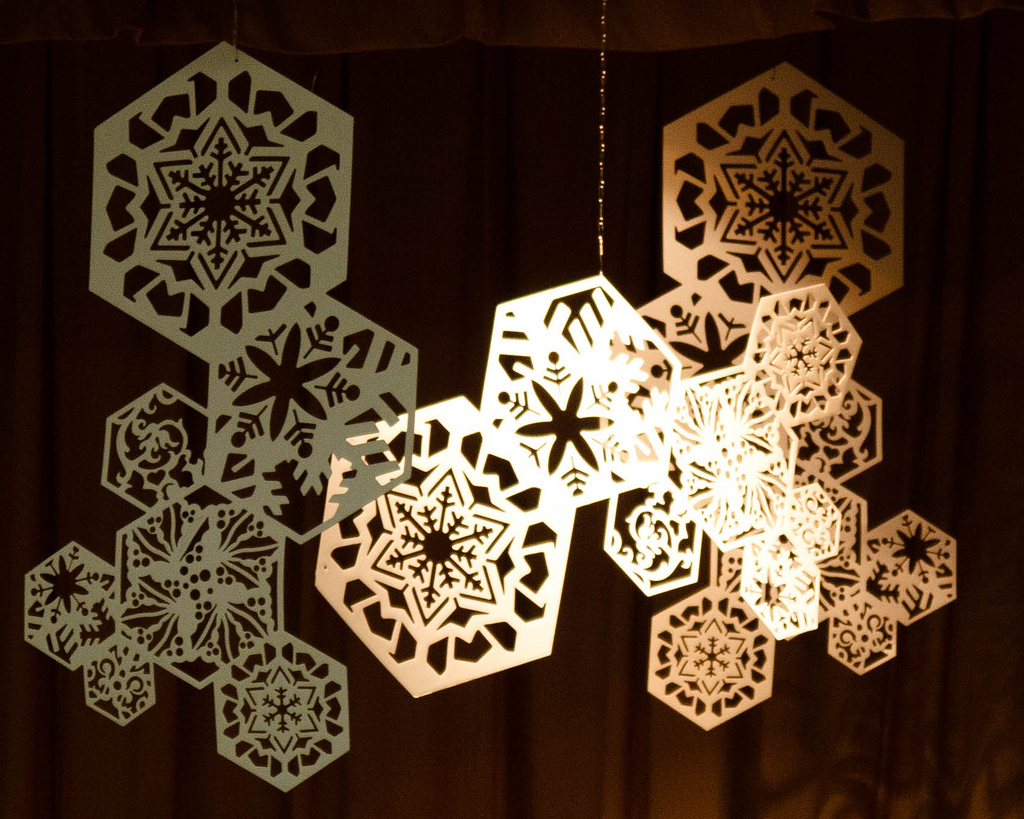
Photo: flickr/Corvar152
I’m also trying not to end up bitter and angry. Slowly, slowly. Two steps forward and one step back. It helps to remember the good parts, the times the tears fell from joy, the times I bled only a shy sort of pride. To be sure, I won’t forget the way his arms felt as they pushed me into the wall, again and again. But I also won’t forget how these arms hugged me after a long day at work and how he rested his head on my shoulder and how warm and loved I felt. I will remember his anger and the gash on my chin, but I will also remember how he gently cups my face when he tries to sneak a kiss. I will never forget my daughter sobbing after he forced her head into a trash can, but I will also easily recall his tears as he held her all wrapped up in that baby-blankie the hospitals give you. Night falls, and as he sleeps I sit by the bed, ruffling my hand slowly through his soft curly hair. I know it’s wrong, all the self- help books and therapists will tell me to keep my dignity, but just now I want nothing more than the deceptive cocoon of his caress, his sweet embrace, his forgiveness. Like Facebook says, “It’s complicated.”
Filthy snow piled up on the New York City streets when I got engaged in the winter of 1996. I was ecstatic, though, and could care less. The red flags were there, but I ignored them. He yelled in anger at the previous tenant of an apartment we hoped to rent, a mousy, hunchbacked woman used to being screamed at by men. She didn’t take her mini-fridge with her on time, as she promised, and it was delaying our move-in date. She looked at me with a sort of confusion and sadness. Why was I marrying him? I was ashamed and thought about breaking it all off. He cried, he said he was sorry, he promised he would never treat me that way. It sounds ridiculous now, but I was 20 years old and that promise held value. It held potential and hope. And also I remembered Mirele, the classmate of mine who broke off an engagement with a bochur from a choshuve family, and I remembered how we looked at her with pity, knowing she would likely never have the chance for happiness again. At least not until she was an old-maid, off the shelf, not before 24 or 25. So I kept the engagement, and married a few months while later.
The criticisms started shortly after sheva brachos. Why wasn’t the silverware properly polished? Sloppy, disgusting. Why were there half-eaten fruits in the bedroom? Why did I always forget to pull the car into the garage and why didn’t I lock the doors at night? Don’t I know what kind of neighborhood this is? What am I thinking? Am I thinking? How many times does he have to tell me? Why can’t I just listen the first time? If only I’d pay attention, he wouldn’t have to get upset. Am I stupid or what?
Our children were born and as they grew older they learned to copy his mannerisms, his tone. My preteen son recently asked me where my brain was, what was I thinking. I am not a wimp, I’ll have you know. I stood up for myself more than once. This last time, I got in his face and told him he can’t call me stupid anymore, I won’t take it. He told me to get away, warned me really, and then I was slammed into the wall. It was my fault to some extent.
He was uber-frum, my husband, and I hated him for it. And so I amputated myself from all he stood for, slowly and methodically sawing through the flesh and bone and ligament binding me to God and community. The more pain, the better. I blamed our crises on frumkeit, the faulty shidduch system, the pressure to get married, the under-emphasis on middos, the ridiculous chumros. It was all God’s fault. If only I hadn’t worried about being the last girl in my seminary class to get married, I would have broken off this engagement. If only chassidus was really true, it would have made my husband a kinder and more sensitive man, one with more self-control and less anger. If only pretzels didn’t have to be pas-yisroel, he wouldn’t call me an idiot for buying pas akum, wouldn’t bang his fist on the table and yell so loud.
I met some different people recently. A neighbor, a friend’s husband. They have their faults, but a controlling temper is not one of them. Religion is a soothing presence in their home, a warm and comforting blanket. Avremel hugs his children and wrestles with them on the rug. Alex’s eyes light up when the kids show off a parshah arts and crafts made at school. They say “I love you,” to their wives, and they don’t worry about orange juice without a hechsher. It dawned on me that there is no chiyuv m’deoraisa to be an asshole. There is no mitzvah to smack your wife or scream at your kids. It’s a chumra maybe, one kept only by those teetering on the edge of our faith, those who risk the beauty of their families to placate an invisible, angry god.
These days I try to absolve my faith. Religion, I think, is nothing. It is a blank canvass, a freshly fallen snow. It is empty and beautiful and magical. Children run out and roll around in it, covering themselves head to toe, making snow-angels. Adults smile and laugh and drink hot chocolate. But eventually the people and the cars and the pollution turn the snow to thick gray-black mud. It becomes ugly and repulsive and we remember how cold it is and wonder when the thaw will come. And that is the nature of soft and fleeting snow — it lends itself to being sullied and made despicable. We could be angry at the snow, force it to be stronger, more resistant, to withstand the onslaught of humanity. But what’s the point? It’s just snow and I need to stop blaming the snow for the people who make it ugly.
Some people, and I’ve only met a few, are careful with the snow. They walk around it, they treat it with caution and respect. They think of the next wayfarer and whether she will love the snow as much as they do. One of them told me it’s assur to daven from a siddur. You have to pray only from the heart, and if you need a siddur to help, that’s okay too. These people seem sincere. I imagine that fake piety disgusts them. I used to laugh cynically, to seek their faults, to find happiness in the missteps they took when no one but me was looking. But now I treasure them, those who show us how snow can be clean, and soothing, a solid block of ice when we need its shelter. For them at least, if not for me. Too late for me.
I don’t know what I’ll do. Maybe I’ll sweep it all under the rug again and see if we can work things out. Try another round of therapy. Why not? Or maybe I’ll finally get it together and ask him to leave. If I do, maybe I should turn away and close my eyes as he leaves. So I don’t see how he tramples the freshly fallen snow.
9 Responses
“These days I try to absolve my faith. Religion, I think, is nothing. It is a blank canvass, a freshly fallen snow. It is empty and beautiful and magical. Children run out and roll around in it, covering themselves head to toe, making snow-angels. Adults smile and laugh and drink hot chocolate. But eventually the people and the cars and the pollution turn the snow to thick gray-black mud. It becomes ugly and repulsive and we remember how cold it is and wonder when the thaw will come. And that is the nature of soft and fleeting snow — it lends itself to being sullied and made despicable. We could be angry at the snow, force it to be stronger, more resistant, to withstand the onslaught of humanity. But what’s the point? It’s just snow and I need to stop blaming the snow for the people who make it ugly.”
This is one of the most beautiful things I have ever read.
Wow. What a fabulous essay this is. It’s one of the most poignant ones I can recall ever being published on this site.
Leave the bastard or call the cops and have his sorry ass hauled off for abuse if possible.
There is no excuse for anyone to treat you like that.
There are many beautiful things and concepts taught by yiddishkeit (I am not referring to chumras, as I rarely see any sense in them to begin with). Unfortunately I am on the fence myself and while I can’t recommend staying with or leaving religion, I can understand leaving it far behind.
Whatever you decide, know that hurting another physically or verbally, is inexcusable and you need to get away from such a person.
I’ve read your other articles, and then reread some. As someone in a similar situation I was able to strongly identify with it. It may be difficult to understand why and how someone would allow this and tolerate it. There are many factors involved and like you’ve said several times: It’s complicated.
Thanks for sharing this.
omg I can relate to this post almost word for word. I am in a very good place now. In a healthy loving supportive relationship with a healthy, loving and yes, frum man. There is hope after all.
Very sad and scary article. Makes a person wonder whether the kids will repeat the cycle of abuse — the girls being abused and the boys being abusers.
If you as an abused woman wants to hesitate, prevaricate or just make all kinds of sad excuses to stay with a man who beats you, that’s one level of bad choice-making. However, if you are witness to that man hurting your child, then your choice to stay makes you complicit in their harm. You are failing in your most basic parental imperative to protect your children from being hurt, and in that only you are to blame. If your children grown up to hate you for letting them be hurt by him, you will have no defense.
Get your kids out of there NOW
My mom never stopped the abuse and I resent her more than him…mom? That u?
You are stronger than you think, I know how hard it is to leave someone whom you love, someone who you have good memories with. But please, for the sake of your children, get out of that environment. My father was very abusive to my mother, and I ended up farther away from G-d than I ever dreamed. Please don’t fall victim to his lies, hugs, kisses and smiles, he will never change, my father never did. I am 22 years old and my mother left my father 14 years ago, but the memories of watching her get hit night after night for the littlest things still haunt me, I can close my eyes and see her crying out, I can see everyone turning the other cheek when she would walk around with bruises. Please I am begging you, if not for your children, but for yourself find the strength to leave him. I know it’s very very very hard, but this isn’t something that you can plan out when to leave, or when enough becomes enough. Don’t make your children motherless, because that is what will happen. I don’t want to scare you but violence often only escalates. This was a beautifully written piece, I understand not believing in religion anymore or G-d, but can you please believe in yourself, and believe that you deserve better. Please get out while you can.