Brahmins and Brachos in Pushkar
Shmully Braun2011ContestsWinter 2011 Contest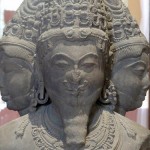 I was told that Pushkar is a colorful city. Legend has it, when Brahma descended to Earth, he came to Pushkar, where a petal from his Lotus flower fell. There are millions of Hindu deities, and Brahma is one of the big three, along with Vishnu and Shiva.
I was standing outside the Holy Lake of Pushkar when a Brahmin priest asked me if I wanted to engage in some sort of religious ritual. I figured, why not? My philosophy of life has always been: when in Pushkar, do as the Pushkarians. The priest put some rice mixed with goo on my forehead and requested that I repeat some Hindu prayers. He also gave me some flowers to throw into the Holy Lake of Pushkar as an offering to Lord Brahma. Then he asked me how many siblings I had.
I am not embarrassed of my ultra-orthodox Jewish background, but I never fess up to being one of eleven siblings; it’s just too complicated to explain. Instead, I lied and said five. Had I known what was to come, I would’ve said I was an only child.
“How much do you wish to donate per sibling?” he asked, in what I took to be the Hindu equivalent of a mishebeirahch in a Hasidic shtiebel.
“How about one hundred Rupee?” I offered tentatively. In U.S. currency, that would be about two dollars, and I thought it quite generous.
“From foreigners we take only euros or dollars,” the priest said, to which I lied and said I had none. The priest lied in response by saying that even the poorest families in India would not give less than 10,000 Rupees. The poorest Indians don’t make 10,000 Rupees in a month.
“I am not negotiating with you,” I said.
The priest looked startled. “What, don’t you love your parents?” he asked. I was causing bad things to happen to them, he explained, by refusing to donate money.
I told him I didn’t believe in karma. “I’m an atheist,” I said.
“That doesn’t matter,” he said. He pointed out other people at the Holy Lake who he claimed were Muslims and Christians engaging in the same rituals.
I had read that in India, people would ask random strangers about their religion. Before I went to India, I asked a friend who is of Indian decent, how people would react if I told them I was an atheist. She said that they would not know what an atheist is. I thought of her then. Based on the priest’s response, he seemed to think atheism was just another religion.
After some more argument, I walked away in disgust, and noticed some of the other priests looking embarrassed. One of them came over and offered me a red string that was supposed to ward off evil spirits, which I declined.
“I’m not concerned about evil spirits.” My tolerance for superstition now in steady decline. He seemed perturbed, but said nothing.
Later, walking around Pushkar, I came across a Chabad House. During my time in India, I had visited religious places of Hindus, Baha’i, Jains, Muslims, Buddists and Sikhs. Why not a Chabad House? I thought, and stepped inside.
It was the second day of Sukkos, and I was there with a friend, who immediately took out her camera and began snapping photos. The shliach didn’t seem to mind, at least not as much as when I told him I was an atheist, now on a roll from my experiences with the Brahmin priest.
My friend, in an ill-conceived attempt to mollify him, declared that she, unlike me, was religious. Catholic, to be precise, which had the net effect of having the shliach ignore her for the rest of our visit and turn his attention to me.
“Would you like to shake the lulav and esrog?” the shliach asked me.
I shook them happily.
“How about eating something in the sukkah and making a leishev basukah?”
I had been performing so many religious rituals that I figured one more wouldn’t hurt. There was one problem, though: it was raining.
“It would be a b’racha le’vatalah,” I told the shliach.
“But you’re an atheist!” he cried.
I refused to make the bracha. “Nowhere in the Shulchan Oruch does it say that an atheist is allowed to make a LeShev BaSukkah in the rain.”
After we left, my friend asked me to explain why I wouldn’t make the bracha in the rain. “I mean, the guy had a point. As an atheist, why would you care?”
I had trouble articulating why I acted as I did, because I was not sure that I fully understood why. Later, back at my hotel room, I thought about it some more, and realized that my actions were born of resentment: these religious freaks were so condescending towards non-believers that I relished the idea of imposing some condescension of my own. In particular, I resented the Chabad shliach, who probably assumes that the only reason one doesn’t observe is out of ignorance of the beauty of Orthodox Judaism. Arguing with him about halacha was my way of showing I wasn’t ignorant of the faith. I know full well what it is, and that is exactly why I reject it.
10 Responses
In the Old City of Jerusalem, an Arab asked us if we wanted to see the second station of the cross. We declined. He persisted. We continued to decline. Eventually we told him we were Budhist. He went away.
When a chabadnik asked me to don tefillin, I asked him where it was written that one had to do that twice in a day. He beamed and told me he was glad I had performed the mitzvah. I told him I didn’t but I did resent his assumption that he was a better Jew than I am. Fifteen years later, he still avoids me when we’re in the same place.
It doesn’t seem like there were any theological arguments as the blurb on the homepage claimed. This is just an account of interactions with clergy of different denominations and while it is an interesting tale, I clicked on the article expecting an actual theological discussion…
I consider myself an apikoros. My wife, when asked her religion, will identify herself as a “water witch”. One of the great experiences of my life was to lay tefilin at the Kotel, when offered by a Chabadnik.
I have always considered it a mitzvah when I give someone else the opportunity to perform a mitzvah.
Shmully, The story of your encounter with Hindus and Jews in Pushkar includes your own admission of condescension and resentment toward the Jewish shaliakh but not to the representatives of the Hindus.
Knowing about a brokho levatolo scores you some points toward the status of apikorses and away from ameratses, but even an apikoyres ought to know the difference between that and shkotses.
Moshe, I am not one who would be recognizable as a khosid of any kind. All the Chabadniks who I remember ever asking me about tefilin asked IF I had put them on WITHOUT assuming I hadn’t, and sometimes they even asked if I was Jewish, first. Perhaps Chabad has changed its street-side scripts for tefilin mobiles since your incident happened. “God forbid,” I wouldn’t presume that you had or hadn’t put on tefilin, but your resentment might just be misplaced.
Interesting story. I’m sure the chabad rabbi was totally confused afterwards. If you’ll allow me, here’s my take on it:
You don’t feel condescended to, you feel like you’re being used. That’s what connects the two stories.
The Hindu priest didn’t want to help you, he wanted your money.
The Chabad Rabbi wanted you to do an act resembling a mitzvah so that you should be turned on. WHatever his reasons were though, you’ll do it if it’s on your terms. Whether that’s to not look like just an angry rebellious boy in front of your friend, or because at some level you’ll feel good knowing you did a possibly spiritual act, but you won’t engage in self-manipulation.
On the other hand, a sincere Brahmin priest will perform most any ceremony for you – regardless of your religion. And in most Hindu temples, you will receive thirtham (holy water) and prasadam (fruits/food) offered during puja – regardless of your religion. Not like the Catholic who was ignored by the Chabad rabbi after realizing she was not one “of the fold”.
Interesting. I’m a hindu-born Atheist. I think most religion-related rituals have become not much more than a business: money-making schemes. Funny story though!
All i can say is all priests r not same..
M also a priest from pushkar,but earning money is not my prioity.
Good karma is essential & rituals r the way to worship,no matter its hindu, jewish or catholic..
Have faith in urself,have faith in god.
Good luck.